Top 5 Carpet Cleaning Methods That Professional Cleaners Use
Not all carpet cleaning is the same. When you hire a professional, the method they use decides how deep the clean goes, how long your carpet stays wet and what is left behind in the fibers. Most companies rely on a handful of proven approaches. Understanding them helps you compare quotes fairly and pick the one that suits your carpet, your schedule and your space.
1. Hot water extraction (steam cleaning)
This is the method most professionals and many carpet manufacturers point to for deep cleaning. Hot water and a cleaning solution are driven into the carpet, then pulled back out with a powerful vacuum, taking the loosened soil with them. It flushes out embedded dirt, allergens and residue better than most alternatives, which makes it a strong choice for heavily soiled carpet. The trade-off is drying time, since the carpet is damp afterward. Technician skill matters here, because too much water or poor extraction can cause problems.
2. Dry compound cleaning
In this low-moisture method, an absorbent compound lightly dampened with cleaning agents is spread over the carpet and worked in with a machine. The compound attracts soil, and it is then vacuumed away. Because there is very little water, the carpet can be used again quickly, which is useful for offices and for humid conditions. The limits are that it depends on very thorough vacuuming and may not match the deep-cleaning power of extraction on heavily soiled areas.
3. Bonnet (rotary) cleaning
Bonnet cleaning uses a spinning, absorbent pad on a rotary machine to lift soil from the top of the pile. It is fast and fairly dry, so commercial spaces often use it for routine maintenance and to keep appearance up between deeper cleans. Think of it as a surface refresh rather than a deep clean. It works well as part of a schedule, not as a substitute for periodic extraction.
4. Encapsulation
Encapsulation uses a polymer-based cleaning solution that surrounds soil particles. As it dries, it forms tiny crystals that trap the dirt, and a thorough vacuum then removes them. It is low-moisture, dries quickly and leaves little residue when done properly, which is why it is popular for maintenance cleaning in offices, retail space and other high-traffic areas.
5. Foam cleaning
Foam, or shampoo-style, cleaning applies a foaming solution that is agitated into the carpet and then extracted or vacuumed after it dries. It is an older approach, and residue is the main concern. If foam is not completely removed, it can attract new dirt and leave carpet feeling sticky. Many professionals now prefer extraction or encapsulation, but you may still encounter foam in some situations.
How to choose the right method
The best method depends on a few factors: the carpet fiber and construction, how heavily it is soiled, how quickly you need to use the room again and the humidity in your home. A busy business might alternate low-moisture maintenance with a periodic deep extraction. A family home with pets and children often benefits most from deep extraction on a regular schedule. Whichever route you take, avoid stacking too many methods in a short time. Our post on whether carpets can be over-cleansed explains why.
It also pays to ask any company which method they plan to use and why. Our list of 5 questions to ask before hiring a professional carpet cleaner will help you start that conversation.
The products matter as much as the method
Even the best method can leave a poor result if the cleaning solution is harsh or poorly rinsed. ēkoserve builds its services around green cleaning products, and you can read more about the benefits in the advantages of choosing a green carpet cleaning company.
Matching the method to the space
A family home with pets usually does best with deep hot water extraction on a regular schedule. An office or retail space may use a low-moisture method for routine maintenance and add a deeper clean at longer intervals. Stairs and entryways take the hardest wear and often need extra attention. Delicate fibers such as wool need a gentler approach, and rugs are cleaned differently from wall-to-wall carpet, which is why ēkoserve offers a separate rug cleaning service.
What about drying time?
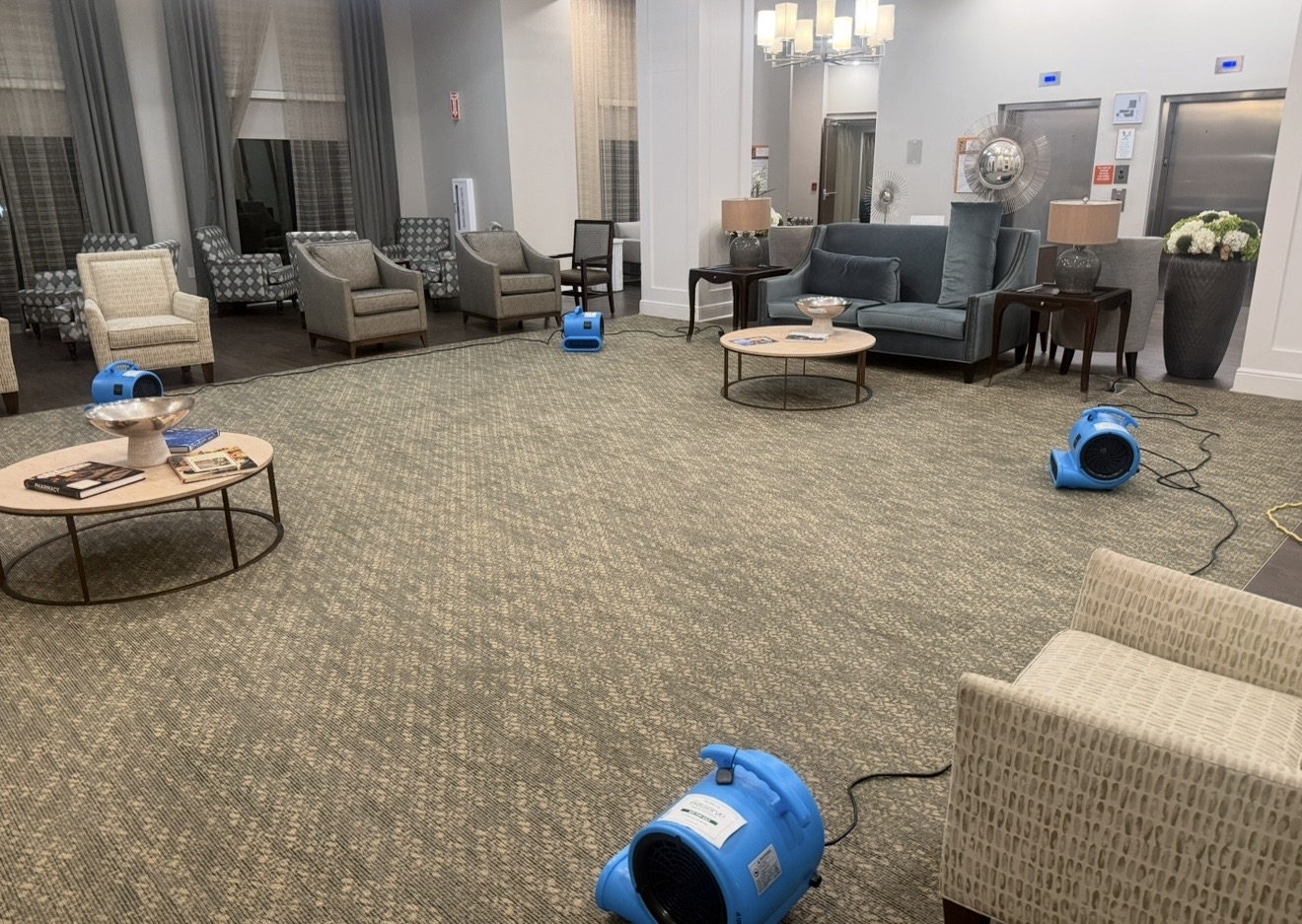
Drying time is one of the biggest practical differences between methods. Extraction leaves the carpet damp for a while, and low-moisture methods are usually ready for use much sooner. Airflow, temperature and humidity also play a role, so running fans and keeping air moving helps whichever method you choose. Ask your technician for an honest estimate and plan the day around it.
Frequently asked questions
Which method is the best?
There is no single best method for every carpet. The right choice depends on the fiber, the soil level, how fast you need the room back and how often the carpet is cleaned.
Can a company combine methods?
Yes. A low-moisture method between deeper cleans is common in commercial spaces. Just avoid stacking too many treatments close together, as we explain in can carpets be over-cleansed.
Is steam cleaning the same as hot water extraction?
People often use the two terms for the same thing. In most cases, the process uses hot water and extraction rather than true steam, but the goal is identical: flush out soil and pull it away.
Get a recommendation for your carpet
Not sure which approach is right for you? A quick inspection will answer that. Explore our carpet cleaning service, then request a free quote or call 972-222-5326. You can also learn more about us at ēkoserve.