The Science behind Professional Carpet Cleaning
Carpets are among the most costly investments in a household, and they need proper maintenance to keep their value. Entry mats and regular vacuuming are great forms of preventative care, but sooner or later every carpet needs more. Professional carpet cleaning is not magic. It is applied science, and understanding how it works explains why it succeeds where a vacuum and a spray bottle cannot.
Two kinds of soil, two kinds of problem
Carpet soil comes in two broad types. Dry soil, such as dust, sand and grit, is made of particles that sit between the fibers and can mostly be vacuumed. Oily or sticky soil, such as cooking residue, body oils and tracked-in grime, clings to the fibers and acts like glue for the dry particles. This is why a carpet can be vacuumed daily and still look dull. Removing that sticky layer requires more than suction.
The four factors of cleaning
Cleaning professionals often describe the process using four factors: chemistry, heat, agitation and time. Changing one factor means the others must adjust. A technician who understands all four can clean deeply without damaging your carpet.
Chemistry. Cleaning solutions contain surfactants, which are molecules that surround oily soil and lift it away from fibers so it can be rinsed. The right formula depends on the type of soil and the fiber, and the chemistry has to be rinsed out afterward, because leftover product can attract new dirt.
Heat. Warm or hot water helps solutions dissolve soil and loosen greasy deposits more effectively. The temperature has to match the carpet, since too much heat can harm some fibers or set some stains.
Agitation. Gentle mechanical action helps the solution work into the pile and break the bond between soil and fiber. Too little leaves dirt behind. Too much can distort or fuzz the carpet, so technique matters.
Time. Cleaning solutions need a short dwell time to do their work. Rushing the job reduces results, and waiting too long can let solution dry in the fibers.
Extraction: the step that makes the difference
Loosening soil is only half the job. It also has to leave the carpet. In hot water extraction, a powerful vacuum pulls the solution and the dissolved soil out of the pile. The strength of the extraction decides how much water and residue is left behind, which affects drying time and how long the carpet stays clean. This is a major reason professional equipment outperforms most consumer machines. See our guide to the top 5 carpet cleaning methods professionals use for how other methods handle this step.
Why fiber type matters
Nylon, polyester, wool and blends behave differently. Some tolerate hot water and stronger agitation, while others need a gentler touch and lower moisture. This is why a good technician inspects your carpet before choosing a method, and why a one-size-fits-all approach can lead to problems. If you are curious about the risks of too much product or water, read about whether carpets can be over-cleansed.
Drying completes the process
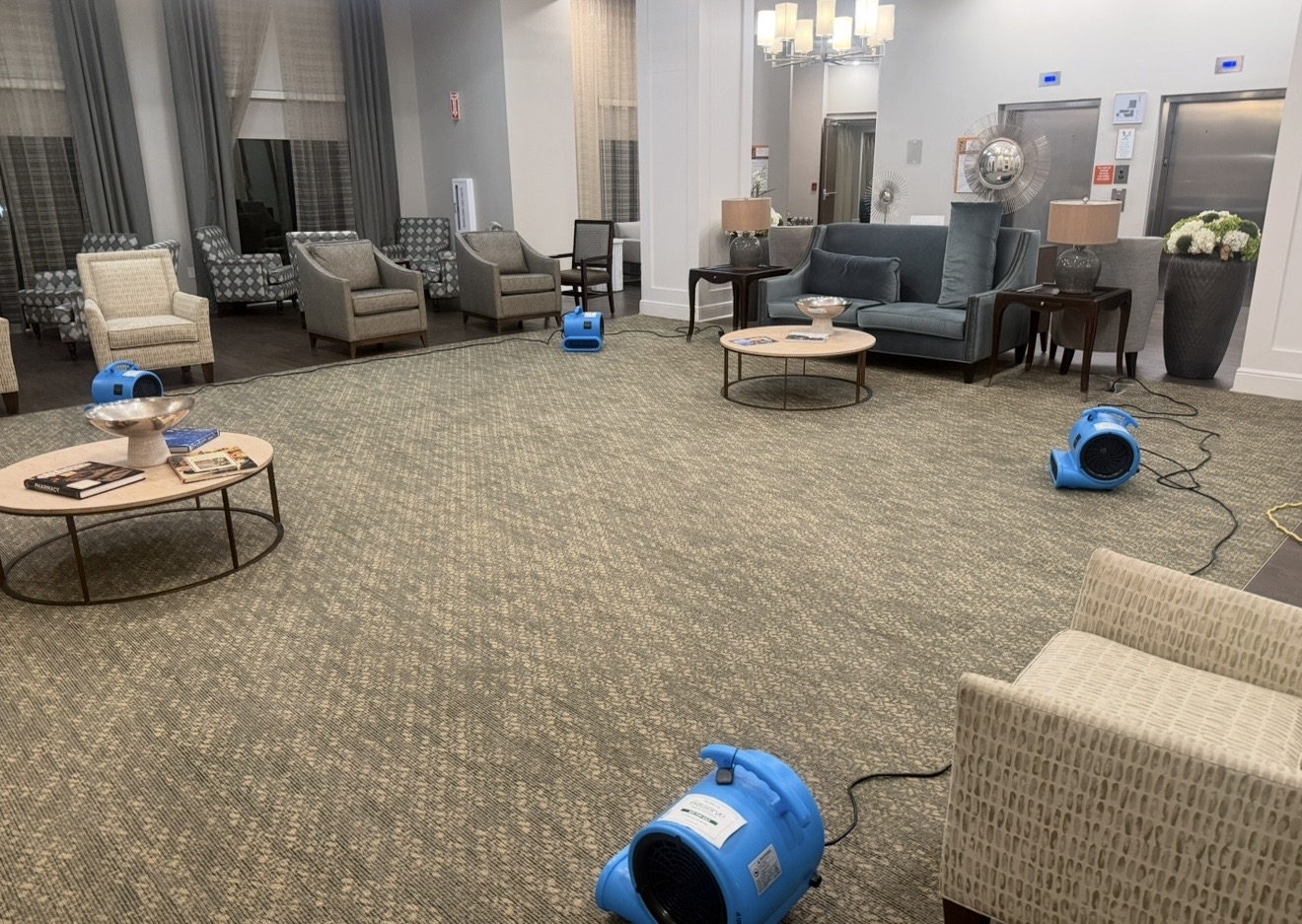
A carpet is only truly clean when it dries properly. Airflow, temperature and humidity all affect drying time, and fast, even drying prevents odors and stops stains from wicking up from the backing. Fans, ventilation and good extraction all help.
Science, not guesswork
Understanding the science also helps you spot myths. Cleaning does not make carpets dirtier when it is done right, and vacuuming alone cannot remove oily soil. For more, see common carpet cleaning myths.
What happens when the science goes wrong
Each factor can cause trouble when it is out of balance. Too much detergent or poor rinsing leaves residue, which leads to fast re-soiling. Too much heat can set some stains. Too much water pushes moisture into the backing and can bring old stains back to the surface as it dries. Too much agitation can distort the pile. A technician who understands these trade-offs adjusts each factor to protect your carpet.
The role of pH and rinsing
Cleaning solutions can be more acidic or more alkaline, and carpet fibers and dyes respond differently to each. A good process matches the solution to the fiber and finishes with a thorough rinse so the carpet is left in a balanced state. This is part of why professionals can deliver a cleaner and softer result than a one-step approach from a store-bought product.
Frequently asked questions
Why do some stains come back after cleaning?
Usually because moisture or residue remains in the carpet backing or pad and wicks to the surface as the carpet dries. Better extraction and drying prevent most of these cases.
Why is hot water more effective?
Heat helps cleaning solutions dissolve and loosen oily soil. The temperature just has to suit the fiber.
Does vacuuming before cleaning really matter?
Yes. Removing dry soil first lets the cleaning solution work on the sticky soil that is left, and prevents loose grit from turning into mud.
Put the science to work for your carpet
ēkoserve combines proven cleaning methods with green cleaning products to clean deeply and gently. Explore our carpet cleaning service, then request a free quote or call 972-222-5326. Learn more about us at ēkoserve.